If you want Manhattan convenience without giving up style, NoMad usually lands on the shortlist fast. This part of the city blends a central location, strong transit access, distinctive architecture, and a polished day-to-day feel that appeals to many buyers and renters. If you are trying to decide whether NoMad fits your lifestyle, this guide will walk you through what daily life actually looks like here. Let’s dive in.
Where NoMad Sits in Manhattan
NoMad stands for North of Madison Square Park, and it generally centers around the 26th to 30th Street corridor near Park Avenue and Broadway. It sits in a highly connected part of Manhattan, which is one reason the neighborhood feels active from morning through evening.
The area is known for its mixed-use character. You are not moving into a purely residential pocket. Instead, you are living in a district where homes, offices, hotels, restaurants, and everyday services all operate side by side.
The Overall Feel of NoMad
NoMad feels polished, busy, and very much part of the daily rhythm of central Manhattan. The neighborhood serves residents, commuters, visitors, and a growing business base, which gives it an energetic atmosphere throughout the week.
At street level, the area is pedestrian-oriented and packed with activity. Public seating, outdoor dining, and walkable streets all contribute to a neighborhood experience that feels convenient and social rather than secluded.
If you are looking for quiet side streets and a deeply residential tone, NoMad may not be the strongest fit. If you want a central Manhattan lifestyle with movement, access, and amenities close at hand, it can be very appealing.
Public Spaces Shape Daily Life
One of NoMad’s biggest advantages is how much public space influences everyday living. Madison Square Park is a 6.2-acre public park and a major daily destination, giving the neighborhood a true outdoor anchor.
The area also benefits from NoMad Piazza and other pedestrian-focused public spaces that prioritize seating, cycling, and outdoor use. That matters in a dense part of Manhattan, where usable public space can have a big impact on how a neighborhood feels.
You also see that energy in the numbers. The broader district recorded average daily subway use of 160,000 in the first quarter of 2024, and the Flatiron public plazas reached average daily pedestrian counts of 67,000 in March 2024. In simple terms, this is a neighborhood where people are out and about.
Architecture Has Old and New Side by Side
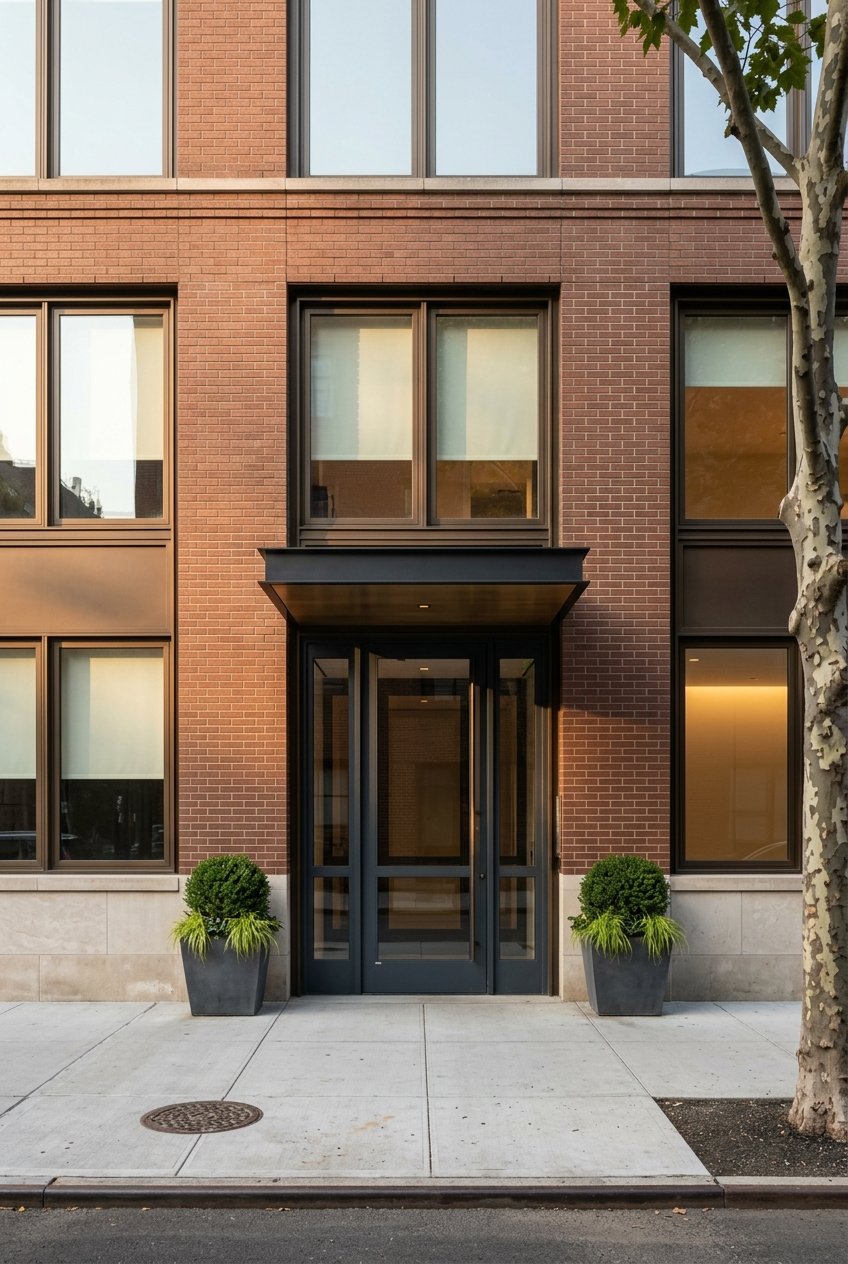
NoMad has a layered streetscape that mixes older masonry buildings and Beaux-Arts-era architecture with newer residential towers. That contrast is part of what gives the neighborhood its identity.
Historically, the area evolved from affluent residential blocks into a commercial district, and that history still shows up in the building stock today. Landmarked properties and older facades help preserve a sense of character even as newer development continues to shape the skyline.
You can also find residential conversions that keep a more historic feel. Gilsey House is one example of a former grand hotel that now serves modern residential use. For buyers who like prewar character but still want a central location, that mix can be attractive.
Housing Options in NoMad
NoMad housing tends to fall into two broad categories: newer full-service condos and older co-ops or conversions. That gives you a wider range of ownership styles than you might expect in a compact Manhattan neighborhood.
Current StreetEasy data shows 90 homes for sale, 66 rentals, and 8 new developments in NoMad. Median asking prices are about $2,462,500 for for-sale listings and $6,569 for rentals, which places the neighborhood firmly in the higher-end Manhattan market.
There is still variation within that range. StreetEasy reports condo medians from $675,000 for a studio to $1,850,000 for a one-bedroom, while co-op medians range from $499,999 for a studio to $780,000 for a one-bedroom. That means your budget, ownership preferences, and amenity priorities will play a big role in what feels realistic.
Amenities Are a Major Draw
If amenities matter to you, NoMad has a lot to offer. Many of the newer residential buildings are designed around full-service living, with features that can make daily routines smoother and more comfortable.
Examples in the neighborhood include 24-hour doorman or concierge service, fitness centers, yoga studios, pools, spa areas, landscaped courtyards, storage, bike rooms, package rooms, and resident lounges. Some buildings also include guest suites, kids’ spaces, private dining rooms, and pet-focused amenities.
That level of service is part of NoMad’s appeal. For some buyers, it is not just about square footage. It is about ease, convenience, and having a building that supports how you actually live.
Hotels Influence the Neighborhood Experience
Hotels are a visible part of NoMad’s identity, and they shape the neighborhood more than many first-time buyers expect. The district has added six luxury hotels in recent years, and hospitality has outpaced Manhattan-wide averages.
That hotel presence affects the streetscape, dining scene, and overall atmosphere. You will notice polished lobbies, destination restaurants, and a more hospitality-driven energy in many parts of the neighborhood.
For some people, that adds vibrancy and convenience. For others, it can make the area feel less residential than neighborhoods with fewer visitors. It is worth thinking about which side of that tradeoff matters more to you.
Transit Is One of NoMad’s Strengths
For many residents, transit access is one of the clearest reasons to live in NoMad. The neighborhood is served by nearby 23 St, 28 St, 34 St-Penn Station, and 34 St-Herald Sq stations, and it also has access to PATH trains at 23rd and 33rd Streets.
That kind of connectivity makes it easier to move around Manhattan and to reach other parts of the region. If you commute regularly, travel often, or simply want flexibility in your day-to-day routine, NoMad makes that easier.
Walkability adds another layer of convenience. Many errands, dining plans, meetings, and workouts can happen within a short walk, which is a major part of the neighborhood’s value.
Dining and Daily Convenience
NoMad is a strong fit if you want daily convenience built into your surroundings. The official district guide highlights grocery stores, markets, retail, fitness, beauty, and other services, which means many routine needs can be handled close to home.
The dining scene is also a core part of living here. The neighborhood is known as a destination for food lovers and craft cocktail drinkers, with a mix of established hospitality venues and newer concepts.
That does not just matter on weekends. It affects how easy it is to meet friends nearby, grab dinner without much planning, or enjoy a neighborhood that still feels active after work.
Who NoMad Often Fits Best
NoMad tends to work well for buyers and renters who want central Manhattan access, walkability, design-forward buildings, and hotel-style amenities. Based on the area’s housing mix, public-space investment, and transit activity, it often appeals to professionals, couples, downsizers, and pied-à-terre buyers.
It may be less compelling if you are prioritizing larger footprints, a lower-key street presence, or a more purely residential setting. That does not make it better or worse than other Manhattan neighborhoods. It simply means fit matters.
If you are comparing NoMad with areas like Gramercy, Flatiron, or Tribeca, your decision often comes down to pace, building style, and how much energy you want just outside your door.
What to Consider Before You Move
Before choosing NoMad, it helps to be clear about your own priorities. The neighborhood offers a lot, but the right move depends on how you define convenience and comfort.
Ask yourself:
- Do you want full-service amenities in your building?
- How important is fast access to multiple subway lines or PATH?
- Do you enjoy an active neighborhood with restaurants, hotels, and foot traffic?
- Would you prefer a newer condo, or are you open to an older co-op or conversion?
- Are you comfortable trading some quiet for location and convenience?
Those questions can help you narrow not just whether NoMad fits, but which type of building in NoMad fits best.
Final Thoughts on Living in NoMad
Living in NoMad means living in one of Manhattan’s most connected and design-conscious neighborhoods. You get a central location, strong transit access, a real mix of old and new architecture, and a lifestyle shaped by public space, dining, and full-service residential options.
For the right buyer or renter, that combination is hard to beat. The key is understanding whether you want a neighborhood that feels active, polished, and highly convenient rather than quiet and tucked away.
If you are thinking about buying, renting, relocating, or comparing NoMad with other Manhattan neighborhoods, Craig Harris can help you evaluate the options with clear advice and a steady, informed approach.
FAQs
What is NoMad like for daily living in Manhattan?
- NoMad offers a central, walkable Manhattan lifestyle with strong transit access, a busy street scene, public spaces like Madison Square Park, and a wide range of dining and service options nearby.
What types of homes are available in NoMad?
- NoMad includes newer full-service condos, older co-ops, and residential conversions, giving buyers and renters a mix of modern amenity-rich buildings and properties with more historic character.
What are typical home prices and rents in NoMad?
- Current StreetEasy data shows median asking prices around $2,462,500 for homes for sale and $6,569 for rentals, with studio and one-bedroom pricing varying by property type.
What makes NoMad appealing to buyers and renters?
- Many people are drawn to NoMad for its central location, walkability, transit options, design-forward buildings, hotel-style amenities, and easy access to restaurants, groceries, fitness, and daily services.
Is NoMad a quiet residential neighborhood?
- NoMad is generally more active and mixed-use than a quiet residential enclave, so it may be a better fit for someone who values convenience and energy over a more low-key street feel.